

The hospital bag has been ready by the front door for weeks. Bodysuits in size 50, a little hat, muslin cloths, a blanket, the car seat checked. Everything for the baby is in there.
But: what is in there for you?
Items for yourself are often missing from the hospital bag. We pack everything your baby needs to the nines, and almost forget what you yourself need after giving birth. Simply because no one tells you.
This postpartum checklist is about that other half. About what your body goes through in the first days of the postpartum period, and what you can pack to make that recovery gentler. No unnecessary luxuries, far from it. These are things that make your postpartum period more manageable.
Why you forget yourself in the hospital bag
The focus shifts to the baby even before they are here. It starts with the 20-week scan, and it accelerates with every baby shower, every gift, and every question about whether everything is already ready. 'Everything' then means: everything for the baby.
That is not strange, you are preparing for the care of a new human. But while everyone is looking at the baby, there is also someone who has just given birth. Someone who is still bleeding, leaking, and shuffling to the toilet for the first time with wobbly knees.
And you, as a new mother, need just as much care in those first days. Only it rarely makes the list.
What your body goes through in those first days
Without making it sound better than it is, this is what happens to many women in the first days after giving birth.
- Your perineum. The area between the vagina and anus is greatly stretched, and sometimes torn or cut. Sitting, peeing, and getting up can be painful because of this.
- Blood loss. The postpartum bleeding (lochia) can be heavy in the first days and often lasts for weeks. You need soft, absorbent pads for that; regular sanitary pads are usually insufficient.
- Engorgement. Around day three, milk production gets going. Your breasts can feel hard, warm, and painful, even if you do not want to breastfeed.
- Stitches. After an episiotomy, tear, or cesarean section, you have to deal with stitches. For that, hygiene, time, and rest are important.
None of these things is a sign that something is wrong. This is what normal postpartum recovery looks like. But it goes a lot better if you have something ready for it, instead of sending your partner to the drugstore on day one while you survive AND take care of the baby.
The checklist - for you
This is not an unnecessarily long list. These are the things that make the difference between 'I am surviving' and 'this is doable'. Briefly explained for each item what it is and why it helps.
-
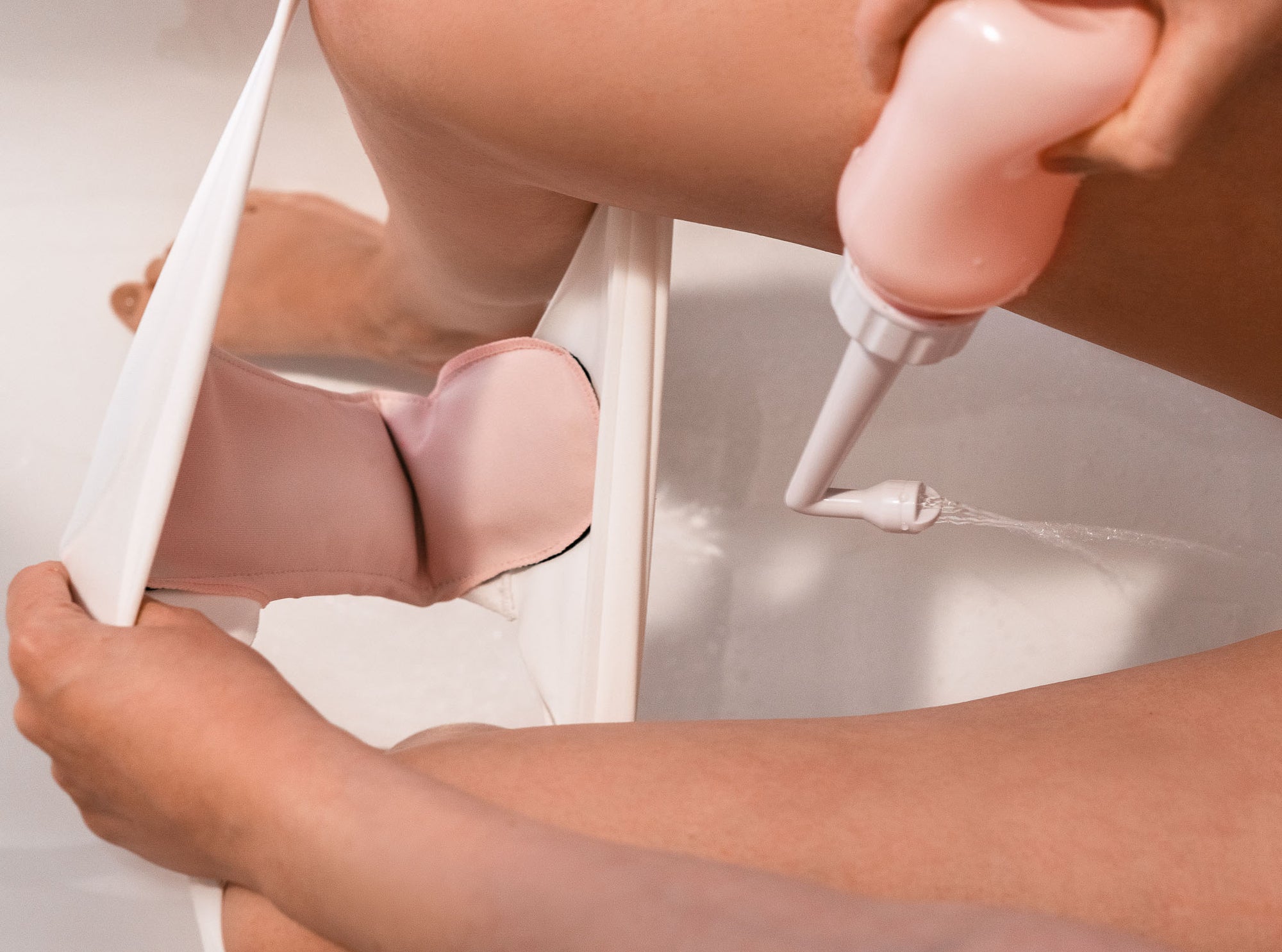
A peri bottle A small bottle with an upside-down nozzle with which you rinse yourself with lukewarm water or lukewarm chamomile tea, instead of wiping. Why it helps: after a tear or episiotomy, wiping is painful, and wounds stay cleaner if you rinse them. It helps with the burning sensation during urination. You use it for every toilet visit in the first weeks. One of those things that women say afterwards: why didn't I know about this sooner?
-
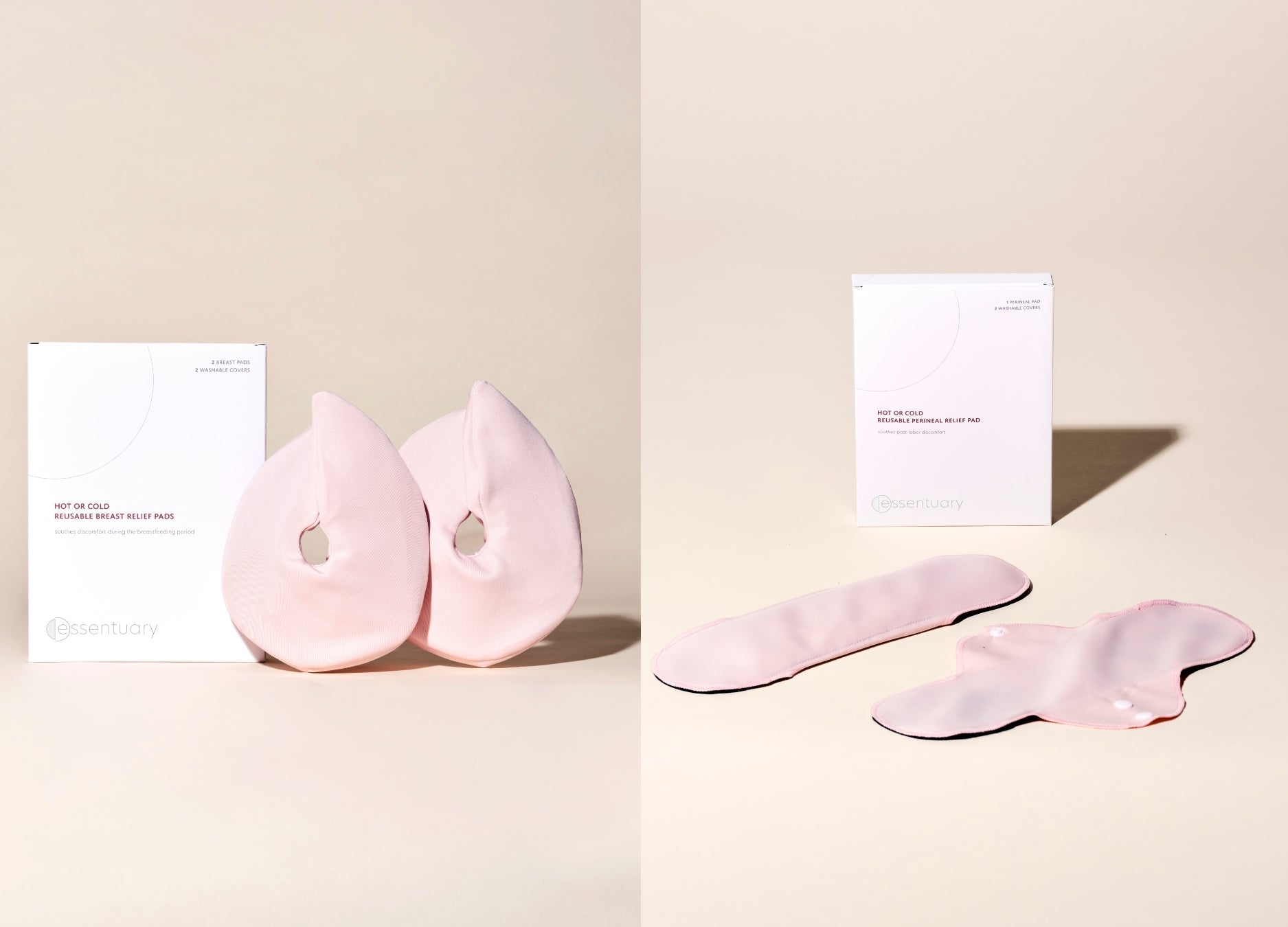
Soothing postpartum pads Extra soft pads that you can use warm OR cold, which soothe the swelling and the burning sensation.
-
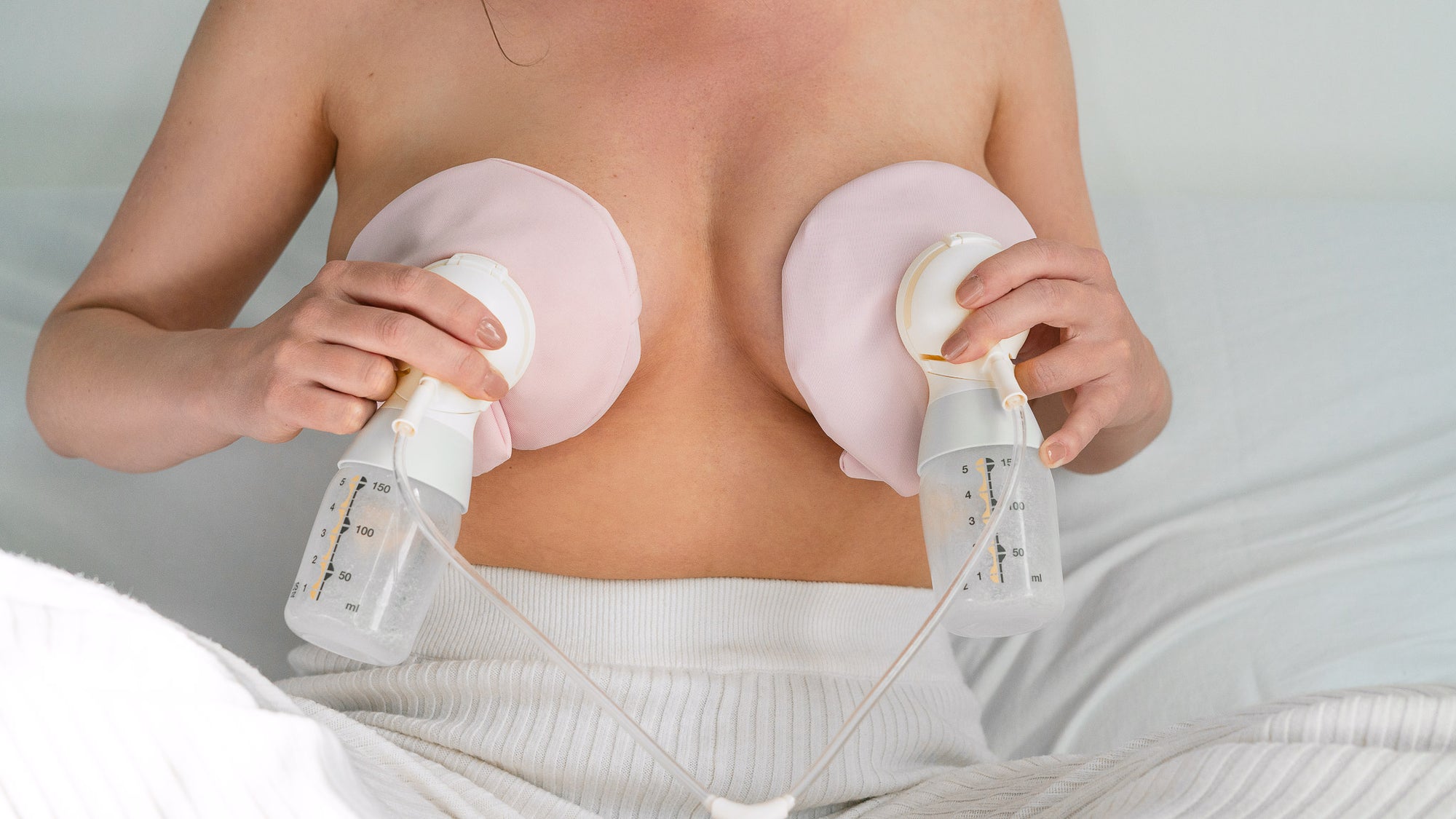
Breast compresses Compresses that you place warm or cold on your breasts. Why it helps: with engorgement, cooling provides relief, and before feeding, warmth can help get the milk flowing. Regardless of whether you want to breastfeed or not, engorgement almost always happens.
-
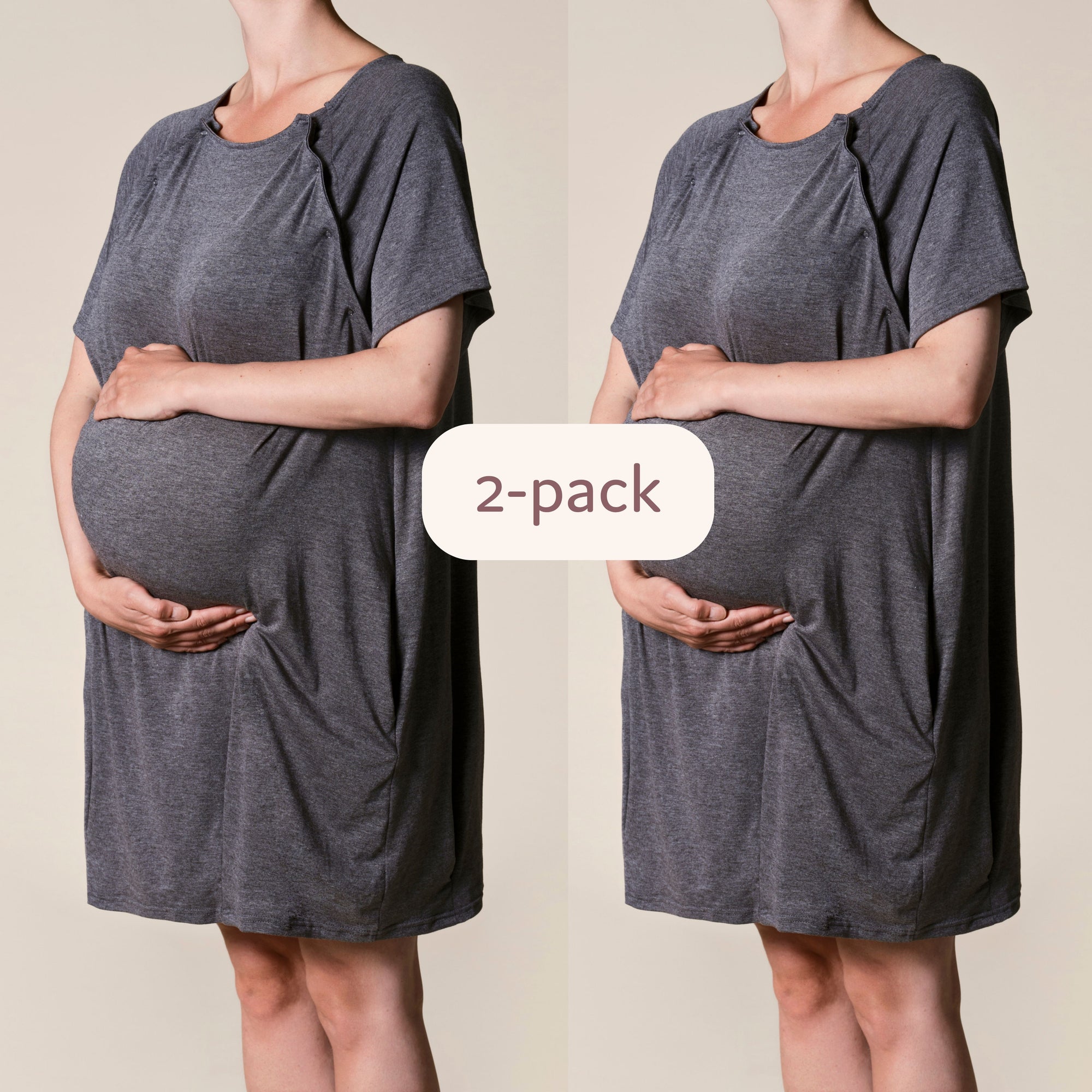
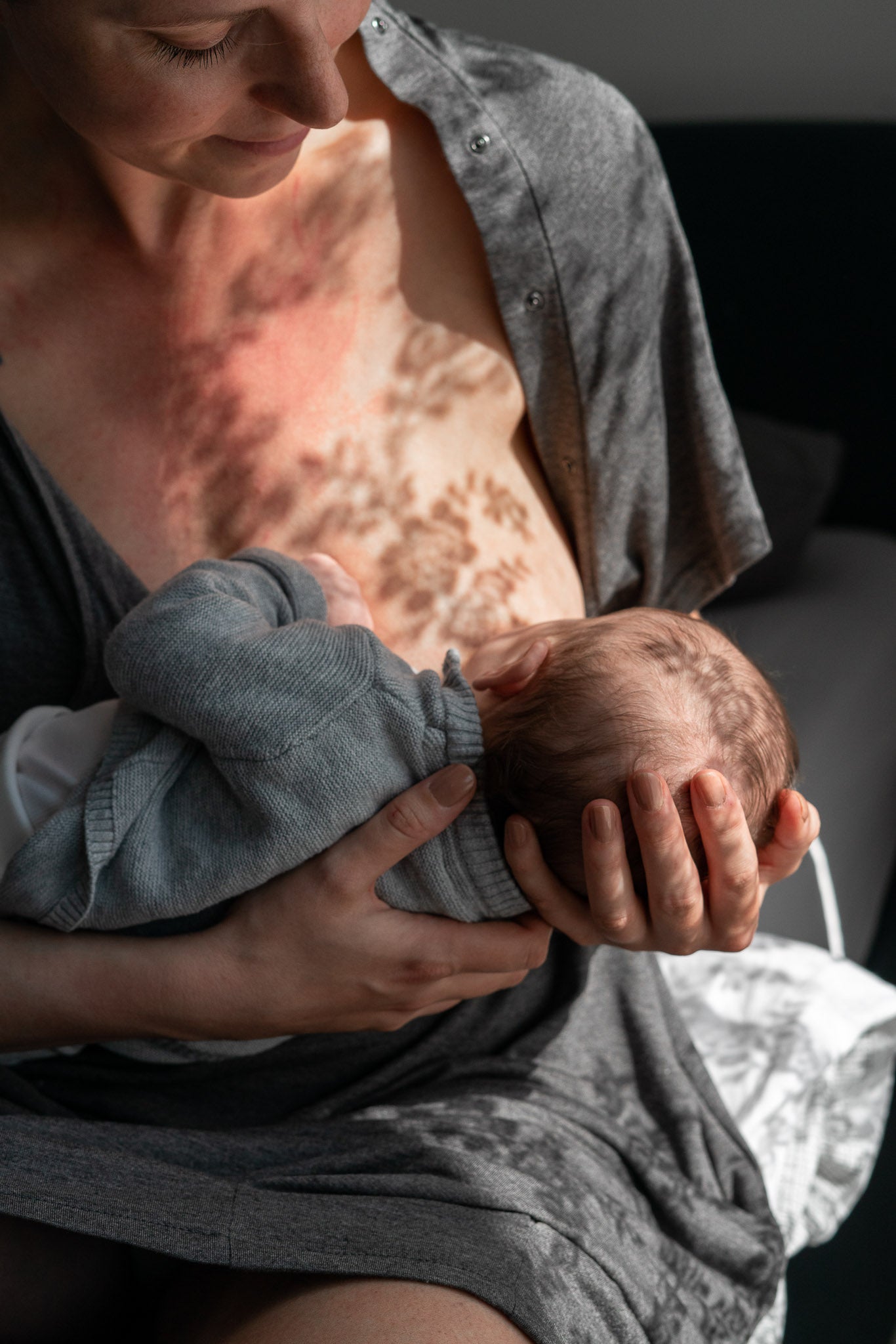
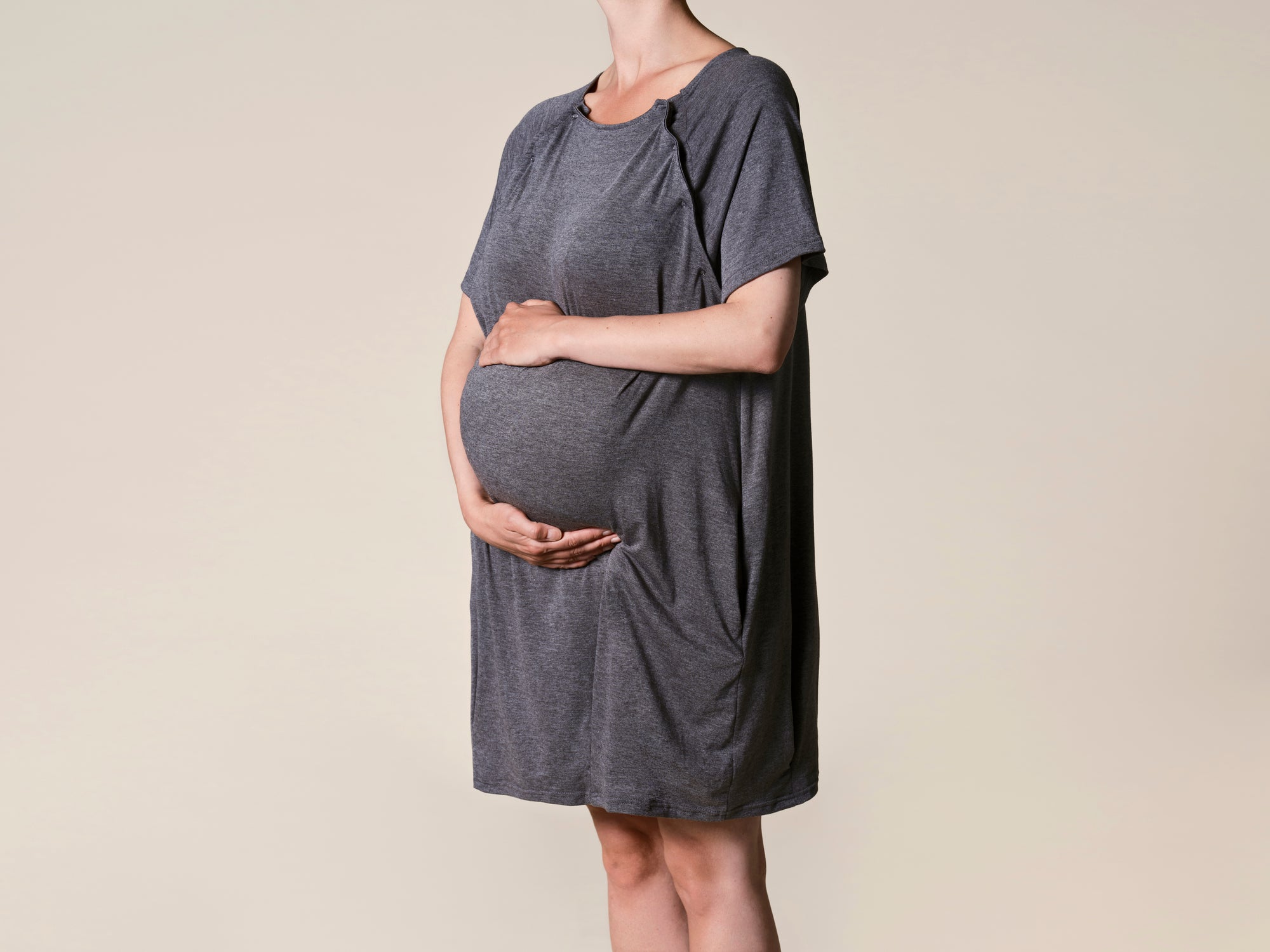
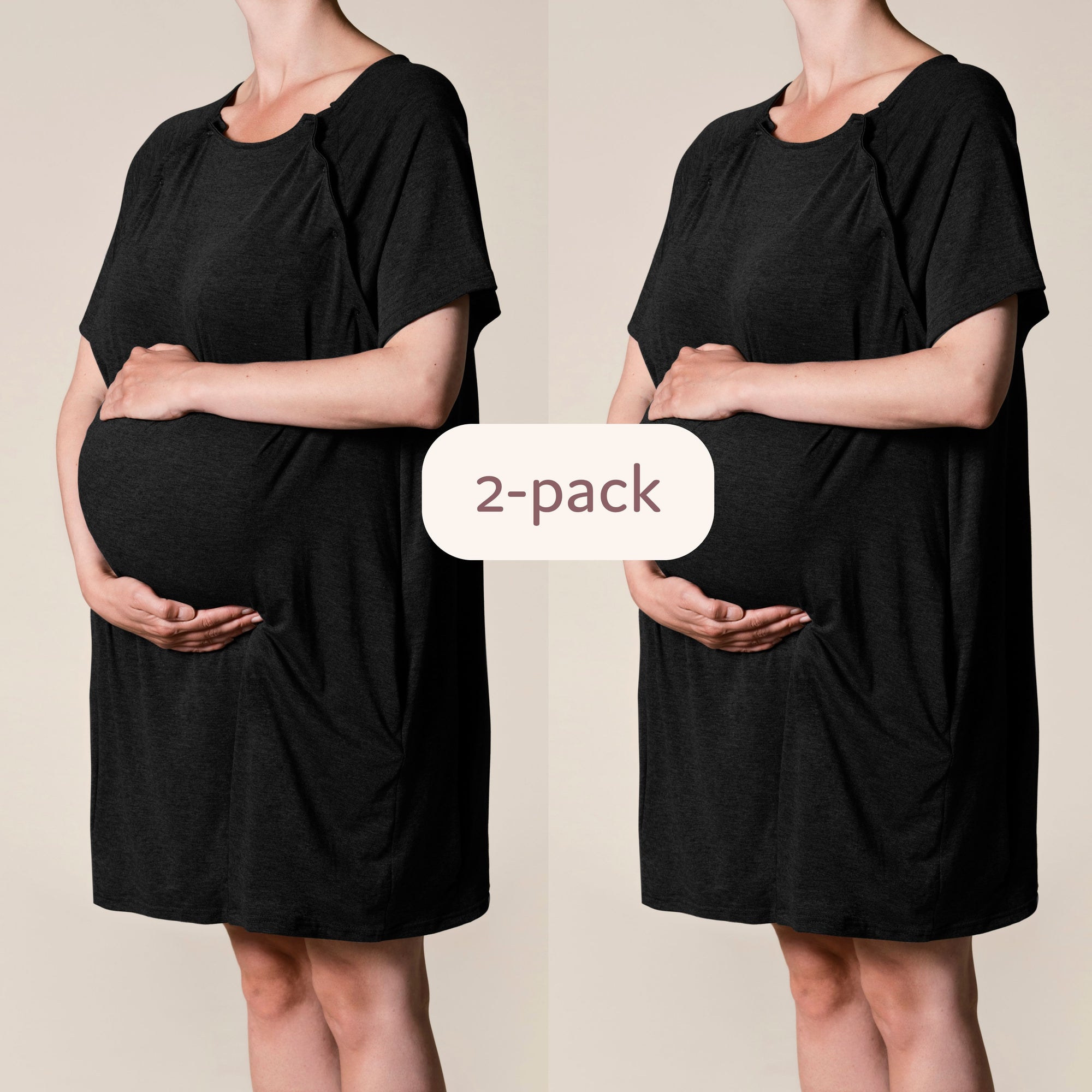
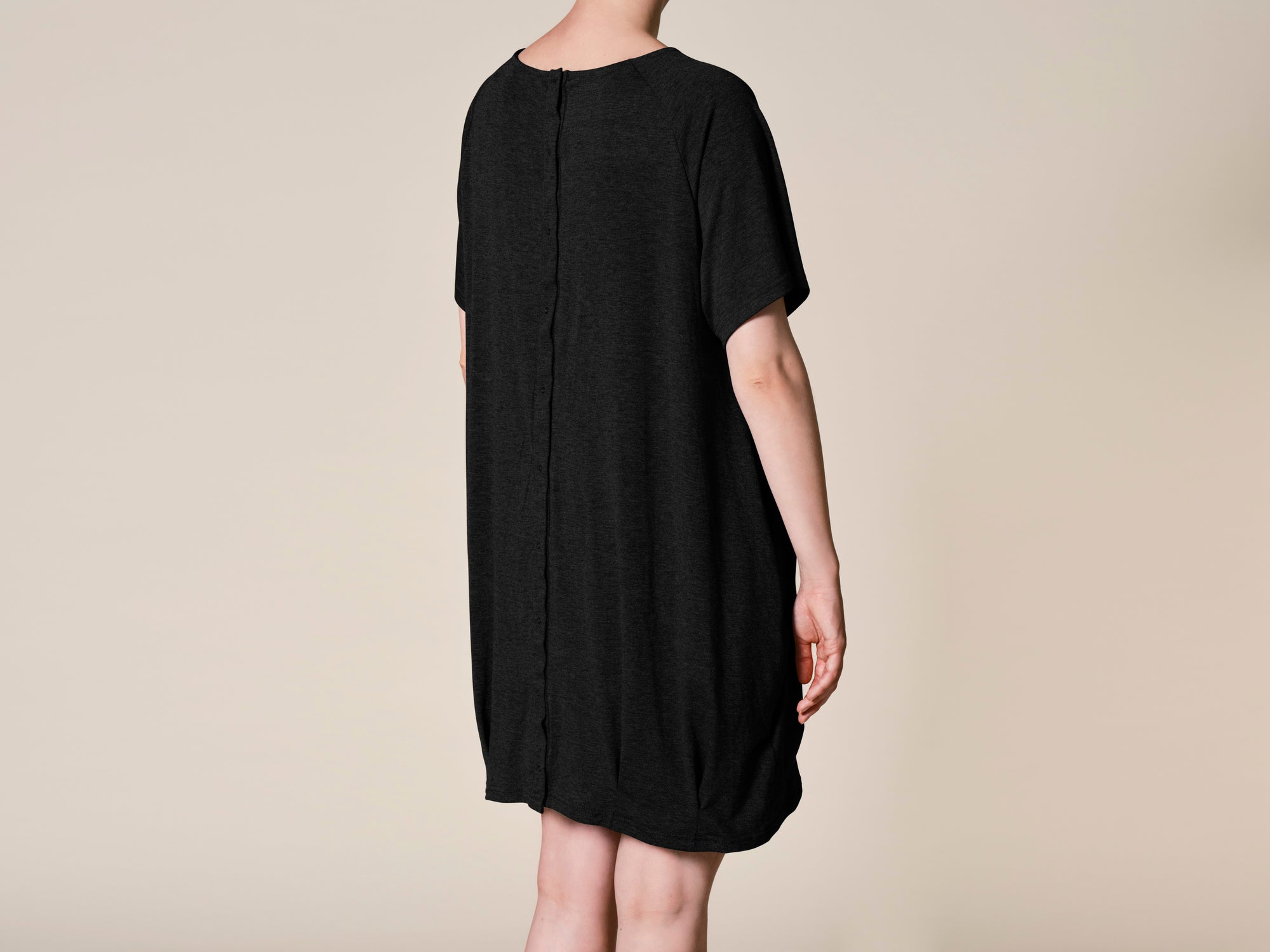
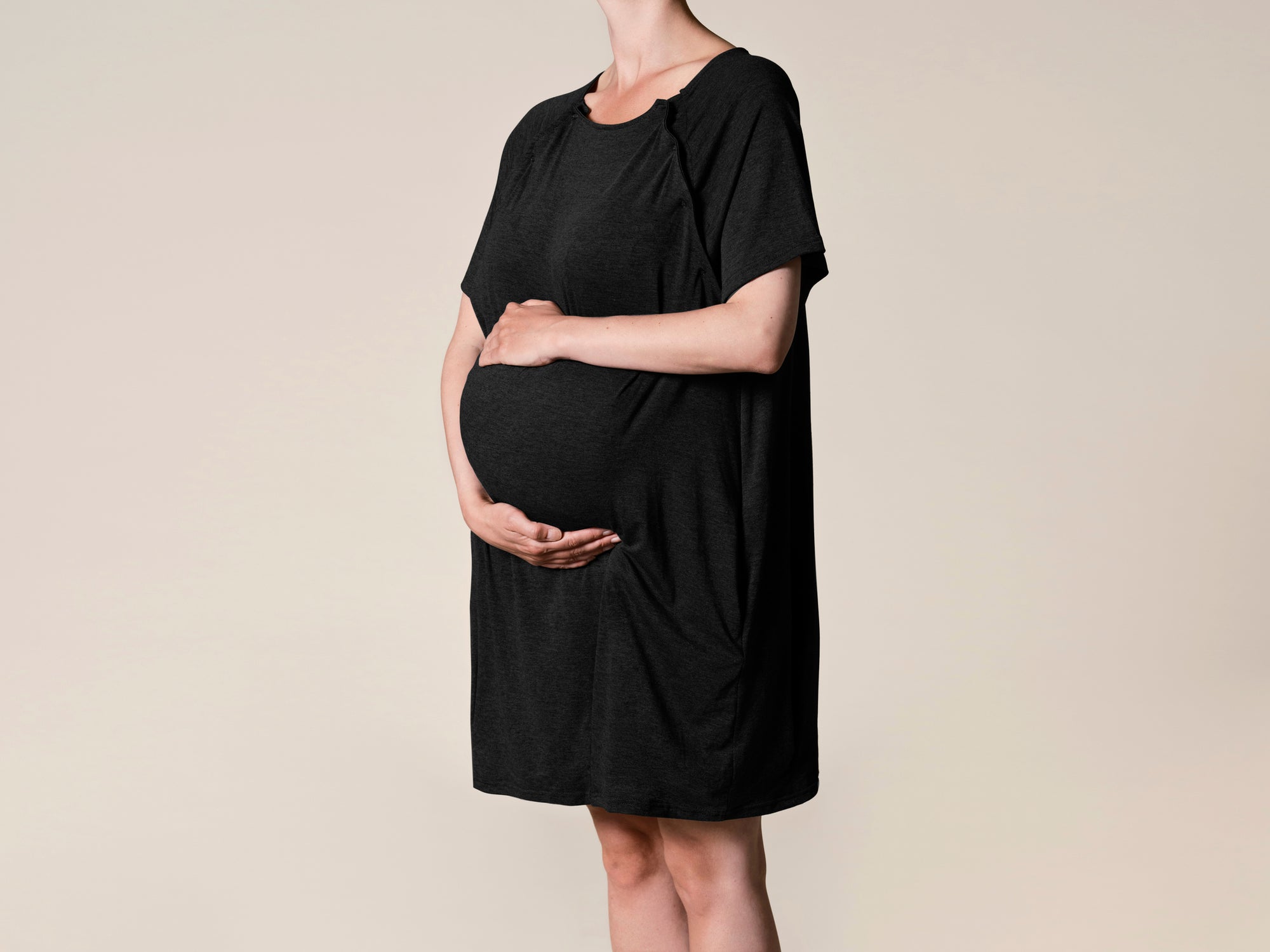
A maternity dress A dress designed for giving birth, skin-to-skin contact, and feeding, with openings in the right places. Why it helps: you do not have to keep changing clothes, you lie comfortably in it in the delivery room AND on the couch at home. You feel more like yourself in it than in a hospital gown or an old loose T-shirt.
- Something for your comfort Think of silver nipple covers if feeding gives you sensitive or cracked nipples, but also the little things: your own pillow, lip balm, a bottle of water with a straw, your earplugs, a chocolate bar. Why it helps: comfort is not an extra in the postpartum period. It is part of how you will start to feel like yourself again.
You do not have to search for this separately. At Essentuary, you can put these items together yourself on the page Build your hospital bag, so you only pack what works for you.
What you do níot need
Being just as honest on the other side: not everything that goes around in app groups and on forums do you need to get in the house.
- The freezer full of apple sauce. Because with the cold packs you have a much better solution for your breasts and the perineum.
- Cabbage in the refrigerator. Cabbage leaves for engorgement is a classic. Whether it really works is scientifically poorly supported, and cooling from a compress does the same — without you smelling like a vegetable stand.
- Ten sets of maternity clothes. You live in a handful of comfortable things in those first weeks. You do not need more than that.
- The most expensive of all. What matters is whether something does its job at the moment you are lying there. Not the price tag.
Preparing is smart. Overloading is not. The difference lies in what you will actually use.
Packing for yourself is óalso care
You do not pack for yourself because otherwise you fail. You do it because the woman who has just given birth deserves to be just as well cared for as the baby she carries. That is not a luxury and not selfishness.
So, next to the bodysuits and the muslin cloths, also put something down for your own recovery. Your future self, three days postpartum on the bathroom floor, will be grateful to you.
If you want to make it easy for yourself, then at Essentuary you put together your own package on the page Build your hospital bag. You choose yourself which postpartum essentials go in it, the peri bottle, the warm/cold postpartum pads, the breast compresses, and the maternity dress. So that you do not have to search for everything separately. Do not see it as a list to check off, but as a way to enter the postpartum period prepared. On your own terms.
DOWNLOAD THE FREE POSTPARTUM GUIDE HERE
Frequently asked questions
When do I pack my hospital bag? Around 34 to 36 weeks is advised. A birth can come earlier than planned, and in those last weeks you do not want to have to think about it anymore. Pack it so that your partner can easily find everything.
What do I need myself after giving birth? For your own recovery, these are the essentials: a peri bottle for relief when peeing, soft and absorbent postpartum pads for postpartum bleeding, breast compresses for engorgement, comfortable clothes such as a maternity dress, and a few small things purely for your comfort. Together they cover the first days in which your body recovers the hardest.
What is in a postpartum box? A postpartum box bundles the care products for the recovery of the mother, instead of for the baby. At Essentuary you put together the box yourself and choose from items such as the peri bottle (the perineum rinse bottle against burning sensation when peeing), warm/cold postpartum pads, warm/cold breast compresses, a maternity dress, and silver nipple covers. So that there is only what you think you need in it, and nothing that you will leave lying around anyway.